So we had some interesting weather the other week, and it got me thinking about blankets. I know I did another post about them, but really, I could talk about blankets forever, and it's my blog... so devil may care.
I like blankets.
The weather went from warm - and RAINY - to sub-zero in less than 24 hours. Weird for Minnesota super weird for the horse owners around. The horses had a jolly day playing and rolling and napping in the sun - and then the temp dropped. This resulted in some shivering, chilly and generally unhappy ponies.
Horses generally take care of themselves, coat wise. But a matted, wet, or dirty coat can't fluff up to keep them warm - and Minnesota often offers horse owners extenuating circumstances. Wind, driving snow, rain, random temperature changes... our horses need some help, no matter how nice of a coat they grow. My Foxie doesn't grow much of anything, and thus she owns a wardrobe that puts most horse owners to shame.
-
I think even the most sturdy of horses should own at least a rain sheet - something to throw on them during that epic 2 day long down pour, or the snow storm you can't even walk through, when you're not 100% sure Pookie will stay in his or her shelter like a smart horse. They should also own a cooler - polar fleece or wool, to help wick sweat away, or serve as an emergency layer under that rain sheet.
-
The world of blankets is kind of a scary one - like most things in the horse world, it's unnecessarily complicated and everyone has an opinion. Here is my DL.
European cut, or that boxy long sided blanket with the upside down V shoulder gusset is the most common, and tends to fit a lot of horses. It's a good place to start for shape.
Measuring for a blanket goes from the center of the chest, around the widest part of the flank to the point of the buttock. Some brands run long, some run short - read reviews, ask around, try a friend's horses' blanket on yours.
I like belly coverage (no tummy sticking out!) and good coverage around the back, with a tail flap to keep out drafts. The shoulder should fit without binding and watch that it doesn't sit too low in the front, and doesn't catch back on the wither, as that can cause friction-related hair loss or sores on the withers. Knowing that my blankets are a bit off in shoulder fit, and that Foxie gets rubbed easily, she wears a shoulder slinky (a shoulder covering piece of spandex that cuts down on the friction) under most of her blankets.
Blankets come in weights, or warmths, and deniers, which is the toughness of the fabric.
- 600 Denier is the standard material, and it's durable enough for a quiet horse. If you have a playful horse, or one who goes out with a rowdy herd, I would try for a 1200+Denier blanket.
- Warmth wise, there are no fill blankets (usually lined with nylon for coat slicking or mesh for breathe-ablilty), medium weights that run 200 - 240 grams of fiberfill, and heavy weight blankets that run 300 grams or more. I find my rain sheet and my medium to be the most useful, and use my heavy for the coldest days.
I look for blankets with hoods and that are waterPROOF and breathable, as they give me the most forgiveness Hoods make up for freak cold days when I can't get out to the barn to swap her into a heavy, and the waterproof and breathable qualities keep them dry (try battling rain rot under a blanket - warm and dark and if not breathable, moist... nope.) and the breathable blanket allows for some small sweating without being truly wet under the blanket. Some people can get by with liners (like on the new Amigo line - those are very cool!) but I prefer to have at least one "outside" blanket, as no matter how many liners you have they don't do any good with a ripped up blanket on top of them. I like detachable hoods as you technically have two blankets and that much more flexibility. Rain sheets are hard to find (as are no-fill hoods) so I tend to stick to high neck blankets that help keep cold drips out from underneath the blanket.
As I mentioned with the new Amigo by Horseware Ireland line, liners are a interesting new thing - it means you can wash all of your blankets at home, as a sheet or a liner should fit fine in most washers. I prefer closed front liners, as buckles rubbing on the underside of buckles screams pressure points to me. I also prefer ones, like the SSTACK or Horseware liners, that don't have straps of their own but instead use the outer blanket's existing straps to keep them in place. It means half the unsnapping and resnapping, and more comfort and less bulk for your horse. I prefer them over the fleece "Liners" that companies sell - fleece screams static to me, and static makes (my horse at least) a little nuts. I lost a nice fleece sheet that way, and found my horse all tangled up and in a bad mess. They're useful, but with a grain of salt.
Some horses find blankets that go over their heads scary, and thus I would make sure to blanket with caution until they become a usual thing, just like halters for the head shy horse or touching ears, or the 1,000 other things horses can become afraid of for some reason or another. My flighty girl quickly learned that she likes her blankets - and will help you put one on her by sticking her head in the hole (whether she is actually "helping" is a different question).
More food for thought,
Ashley and Fox
Sunday, January 20, 2013

If You're Going To Blanket...
You might as well clip...
I like this news!
I'm a big fan of clipping - it keeps you from spending hours cooling out and keeps you from getting a nice horse steam facial. Yuck. Clipping does take some practice, and it helps to have
 This is the Irish Clip. I do a "modified" where I leave the shoulder (to help prevent blanket rubs) and go down between the legs, and then do the belly about that high to taper off. Sometimes I do the whole belly, some times I leave a strip of hair to prevent drafts - its up to you.


I like this news!
I'm a big fan of clipping - it keeps you from spending hours cooling out and keeps you from getting a nice horse steam facial. Yuck. Clipping does take some practice, and it helps to have
Next is the "low trace clip". Foxie's low trace ended up a little... whimsical, but I like the above design. It's softer than mine:

Foxie's is a little squarer in the shoulder and higher in the hip (hips are hard, ok?) but it does the job pretty stylishly.

More cute Fox... How can I resist her!
From there you get into the land of the high trace, which is for a horse in heavy, heavy work or for horses with a lot of hair in a warmer climate. Foxie has a pretty minimal hair coat to begin with (and it's heaviest on her belly) so she could easily get away with a lower clip - and while we were indoors, the indoor wasn't heated or insulated. Foxie, because of the wind and her own peculiarities (a particularly stiff neck) also has Weatherbeeta Oricans with the big crazy hoods. They really made a difference and it worked out great last year.


And from there, we get into blanket, chaser and other various shapes of clip:

If you need to take more hair off than this... I would tread lightly.
Clipping isn't easy. I got very lucky my first time, and Foxie was a well behaved little star for her torture. Either hire a pro, enlist a friend who is able to make their horse look good or... be prepared to deal with any and all mistakes you make. I use an inexpensive clipper, but Fox doesn't have too much hair. I clipped a friend's TB with much more hair and they struggled but seemed to recover. I suggest clipping early - October or November to give the horse time to grow back in a bit before the real cold begins, and blanketing with a hood to give the horse back the heat-keeping hair that you clipped off. I use a 10 blade (though I have adjustable 10-15-30 blade clippers) and keep a mid-bristle brush, clipper oil and shine spray on hand.
Here's my clipping rules:
Bath time first - try to start with a clean horse that won't dull your blades with dirt and dander. Then apply some shine spray, brush through, and allow to dry. Mark out your clip (chalk or masking tape - or freehand, if you're very brave) and fire up your clippers. I try to go in smooth strokes with the hair to try to not take too much off. Rest/take breaks often, let the clippers cool when they start to get warm. When it gets hard or starts to suck, let it go and finish another day. I'm also fond of the combs we originally bought to clip our dogs - they let me take a heavy coat off in sections so my clippers take less abuse. Extension cords, good lighting and hair-resistant non velcro clothing are a must.
And a blanket to turn your poor shorn baby back out with his friends :)
Ashley and (the oft clipped/tortured) Foxie
Feeding Your Baby
Walking into any feed store - or even the horse feed aisle at Fleet Farm - is mind numbing. There are a thousand products, and it seems insurmountable.
Don't worry, I've got you.
There are many types of feed: Complete feeds, ration balancers, straight grains (Don't you just feed horses oats? Don't get me started!), sweet feeds, senior feeds...
Complete feeds are feeds that, when fed in the correct amounts (usually noted on the bag) they provide everything a horse would need. They contain vitamins, minerals and other necessities as well as fat and protein (levels of which will differ formula to formula) and usually a fiber additive, which can serve to replace some of the hay in a horse's diet. Fiber is the most important part of a horses diet - their stomachs do best when they are constantly munching - not porking out quickly and then having a rumbly tummy for hours. Empty stomachs can cause ulcers or other problems, as well as make it ridiculously hard to get/keep weight on a horse who doesn't get a lot of hay (AKA that Thoroughbred type horse). Completes come in formulas, like dog food; senior, growth, performance, etc.We'll talk more about these in a minute.
Ration Balancers are the new thing. RB's are designed for horses who do well on hay alone - they don't need a ton of extra calories, but since hay is hard to measure and expensive to test, it's easier to make sure your horse gets all of his nutrient requirements through a ration balancer. Usually you feed 4 pounds or less and thus feed less calories to get the nutrition than a complete, which you feed in larger amounts. The protein level depends on whether or not you are feeding grass hay or alfalfa- and usually the formulas are labeled, or in Purina's case, Enrich-32 is for grass and Enrich-12 is for alfalfa, as alfalfa is much more nutritionally and protein rich.
RB's can also fill in the holes for horses getting straight grains. I'm not a huge fan, because straight grains are a less efficient food source, and as an event horse owner, I want CALORIES! Straight grains can come straight - your standard oats or corn, or as mixes, or as sweet feeds (mixed grains, sometimes added pellets and molasses to coat/make it super exciting to your horse). I'm not a sugar fan for any horse, so I'm less of a sweet feed fan, but it works well for many people - and for your picky eaters.
Now, back to complete feeds - aka "pellets". Completes come in many formulas - allow me to outline Purina's lines, as I know them best.
Stategy: Professional and Healthy Edge
Strat is a local standard - its what most barns feed. Healthy edge is higher fat, and slightly lower sugar, and is a good option despite the oddity that it's lower calories. For me, Strat is too high in protein and too low in fats - and has a high NSC (non-structured carbohydrates) percent, which basically means it's high sugar. My Thoroughbred needs fat, not more energy, so it didn't turn out to be a good fit, but it's a good starting place and a popular feed.
Ultium - Growth (for your young growing horse) and Competition
I am an Ultium fan, and I am not ashamed. Mid level protein, an industry high for fat content and one of the highest calorie per pound ratios I've found, Ultium has been a source of "cool calories" with its mid level NSC (16 versus Strat's 26). Ultium is also high fiber, which is nice to keep their stomachs moving. This feed I can feed less of, and get more bang for my buck calorie wise.
Omolene Line -
The Omolenes are Purina's packaged sweet feeds. They have several mixes, and some good levels of protein and fat for different needs. I'd just check the NSC before I make that choice. Horses LOVE sweet feed, though, so good to mix for your picky eater.
Equine Family Line
This line includes Equine Junior, Equine senior, and Equine Adult. This are a more generic complete feed line, with the stand out for me being equine senior and senior HE. These feeds are both optimized for the older horse with less teeth (and they soak well) and tend to work well for picky horses who don't like Strategy as much as they're beet pulp based. Generally these are decent, economical feed. For the technical feeder (me!) they're a bit lacking for my calorie and low sugar needs.
Natures Essentials
This heading includes our Ration Balancers (alfalfa and grass), Purina's fat supplement (and it works, holy god. This nugget looks like cat food, and is in the HE feeds and Ultium - it's gooood stuff) and their mineral block line. I've already talked about the benefit of the Ration Balancer revolution, and I highly suggest Amplify nuggets for your fat supplement needs - it's a great way to add calories to a nutritionally balanced diet that is just lacking fats.
As always, I would say contact a feed specialist in the area (many feed companies employ people just to help you feed your horse!) or talk to a feed store employee or other knowledgeable people (like me! Let us crazies do the research!) about your needs and feed options.
We'll talk about supplements next!
Ashley and Foxie
Tuesday, December 18, 2012
Bit Basics #2
Today I'll start covering the next part of the bit - the bars, or part that goes in the mouth. There are a billion options out there. Many people talk about certain reactions of their horse to certain actions - my best tip is to get a friend, grab your bit of choice, and let them pick up contact, pull, jerk, etc on you like you would on your horse. It's definitely educational!
Mullen mouth: straight across, no joints. Often found rubber covered, these bits influence by "tilting" in the horse's mouth. Foxie's pelham was like this, though there are also rubber "dog bone" or mullen mouth bits that are bendy - interesting, but make sure they don't sustain damage and keep in mind that sometimes the cores can snap!
There are several mullen options - the simple metal straight bar, the rubber "dog bone" and the happy mouth ridge are common, and as you see come on a variety of cheeks:


Some rubber models are flexible - usually the black rubber being the least flexible and the white plastic/stuff being the most flexible. The most flexible mouth piece material is the Nathe or Herm Sprenger Duo. I personally bought a Nathe, as my young horse was broken out in one, and really loved while it worked for the young horse. Eventually, her needs changed and we moved on, but these bits are pretty cool!
The Nathe snaffle - look at that flexibility!


And the Duo:

Single Joint: The standard horse bit, with a center joint. Some people feel that these can create a "nut cracker" sensation on the horse's pallet and tongue, but they have been an industry standard for a long time.

French Link: The french link is the new black of horse bits. Gentle, this bit is considered "soft" as it breaks more gently over the tongue and doesn't have the nut-cracker action of the above single link snaffle. I like the french link for it's ability to pick up one side of the horse's mouth, or their dropping shoulder and have more finesse for dressage.

Dr. Bristol: Don't be fooled. I know this looks like a french link. Believe me, it's not. The center link is rotated so the edge - not the nice flat center - lays on the tongue. A little sharper reprimand than our friendly Mr. French Link. The best way to tell the difference is that the french link has the curve to the center link - the Dr. Bristol does not. This is NOT dressage legal.

The "bean": The bean, also called a "lozenge" is another version of a french link, though not as tricksy as the Dr. Bristol. The bean can also be substituted for rotating links, rubber link on a metal bit, etc etc. The "link" is rounded or ball shaped. Always double check your rule book for dressage when using one of these, as you can see that they do come in alternate materials which may or may not be legal. Happy mouths often come with a "lozenge" or center link that rotates, which I believe is not legal, as well, so watch out for that.

There are some cool Herm Sprenger models out there that are an interesting twist on our "bean" or Lozenge options:


Waterford: The Waterford is definitely not crystal. And it's definitely not dressage legal.
This interesting little piece just may be an OTTB owner's best friend. The Waterford is great for horses who grab the bit (like racehorses who have been taught to grab the bit and lean on it for racing balance) and abscond with you across field and glen. The Waterford is soft and liquidy, so there is nothing to lean on - just don't "see-saw" your reins or loose your temper and tug. In the right hands, the Waterford can be a great alternative to some of the bigger bits out there, like Pelhams, running gags and other "fun". They come in a multitude of mouthpieces including gags, bouchers, loose rings (as pictured), dees and full cheeks so they do offer a lot of options.

The slow twist: The slow twist is another "in between" bit that might be that little change you need to keep your snaffle-mouthed jumper in a snaffle. The slow twist gives the bit a little extra "hey there" with your half-halts, and can often be the thing you need to get your horse back to make the striding in that combination.

The double twisted wire: This is not a bit for the faint of heart, or the soft of mouth. I have used this bit on one horse, at a camp, and lawd knows he needed it; and even with it I had no brakes, no steering and no flexibility of jaw or neck. My advice? Just don't use it.

Mullen mouth: straight across, no joints. Often found rubber covered, these bits influence by "tilting" in the horse's mouth. Foxie's pelham was like this, though there are also rubber "dog bone" or mullen mouth bits that are bendy - interesting, but make sure they don't sustain damage and keep in mind that sometimes the cores can snap!
There are several mullen options - the simple metal straight bar, the rubber "dog bone" and the happy mouth ridge are common, and as you see come on a variety of cheeks:
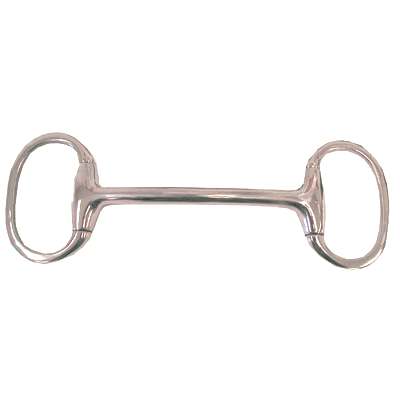


Some rubber models are flexible - usually the black rubber being the least flexible and the white plastic/stuff being the most flexible. The most flexible mouth piece material is the Nathe or Herm Sprenger Duo. I personally bought a Nathe, as my young horse was broken out in one, and really loved while it worked for the young horse. Eventually, her needs changed and we moved on, but these bits are pretty cool!
The Nathe snaffle - look at that flexibility!
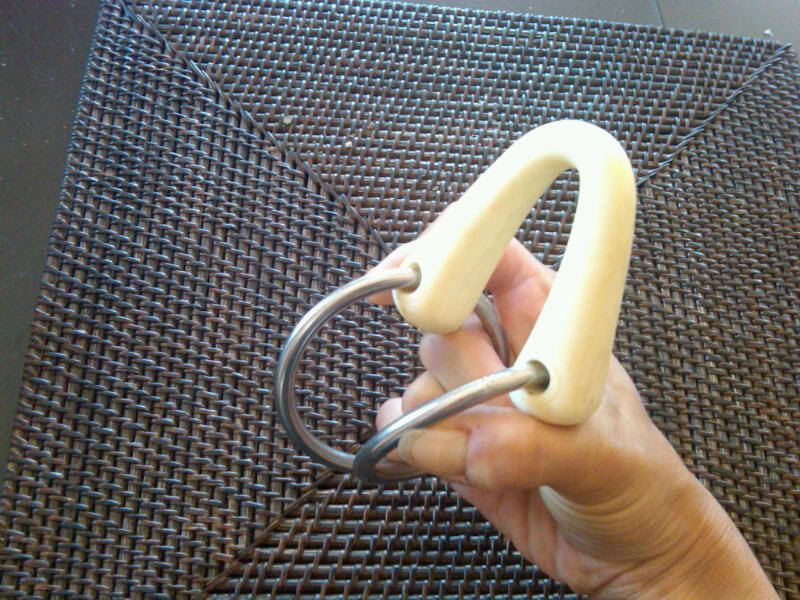
And the Duo:

Single Joint: The standard horse bit, with a center joint. Some people feel that these can create a "nut cracker" sensation on the horse's pallet and tongue, but they have been an industry standard for a long time.

French Link: The french link is the new black of horse bits. Gentle, this bit is considered "soft" as it breaks more gently over the tongue and doesn't have the nut-cracker action of the above single link snaffle. I like the french link for it's ability to pick up one side of the horse's mouth, or their dropping shoulder and have more finesse for dressage.
Dr. Bristol: Don't be fooled. I know this looks like a french link. Believe me, it's not. The center link is rotated so the edge - not the nice flat center - lays on the tongue. A little sharper reprimand than our friendly Mr. French Link. The best way to tell the difference is that the french link has the curve to the center link - the Dr. Bristol does not. This is NOT dressage legal.

The "bean": The bean, also called a "lozenge" is another version of a french link, though not as tricksy as the Dr. Bristol. The bean can also be substituted for rotating links, rubber link on a metal bit, etc etc. The "link" is rounded or ball shaped. Always double check your rule book for dressage when using one of these, as you can see that they do come in alternate materials which may or may not be legal. Happy mouths often come with a "lozenge" or center link that rotates, which I believe is not legal, as well, so watch out for that.


Waterford: The Waterford is definitely not crystal. And it's definitely not dressage legal.
This interesting little piece just may be an OTTB owner's best friend. The Waterford is great for horses who grab the bit (like racehorses who have been taught to grab the bit and lean on it for racing balance) and abscond with you across field and glen. The Waterford is soft and liquidy, so there is nothing to lean on - just don't "see-saw" your reins or loose your temper and tug. In the right hands, the Waterford can be a great alternative to some of the bigger bits out there, like Pelhams, running gags and other "fun". They come in a multitude of mouthpieces including gags, bouchers, loose rings (as pictured), dees and full cheeks so they do offer a lot of options.

The slow twist: The slow twist is another "in between" bit that might be that little change you need to keep your snaffle-mouthed jumper in a snaffle. The slow twist gives the bit a little extra "hey there" with your half-halts, and can often be the thing you need to get your horse back to make the striding in that combination.
The double twisted wire: This is not a bit for the faint of heart, or the soft of mouth. I have used this bit on one horse, at a camp, and lawd knows he needed it; and even with it I had no brakes, no steering and no flexibility of jaw or neck. My advice? Just don't use it.

Yikes.
Other factors are also involved with bits, such as the weight. Sometimes you will see bits that are "hollow weight" or "weighted", and while it can be confusing, I say trust your gut! Light bits will be light in the horse's mouth, and thus the pressure you apply will be more noticeable - but light weights are usually large and round (as are happy mouth/rubber bits) which can be comfortable for your horse, as a larger diameter means more area for the pressure to be applied to.
Weighted bits are rather the opposite - They are a constant weight in the horse's mouth, and thus are "slower" where lighter bits are "fast" reacting. This means that the time between the sensation of your hand asking for something comes to full power more slowly, allowing you to be smoother and subtler. Foxie really likes hers - it's thinner than her french link eggbutt, and she seems to be perfectly fine with the single link bit. It's a loose ring, meaning less to lean on, and she seems more hesitant to grab this bit and go "dead" to my contact while ignoring me/running off/resisting.
Food for thought, huh?
Questions?
Ashley and Foxie
Friday, December 14, 2012
Winter Riding
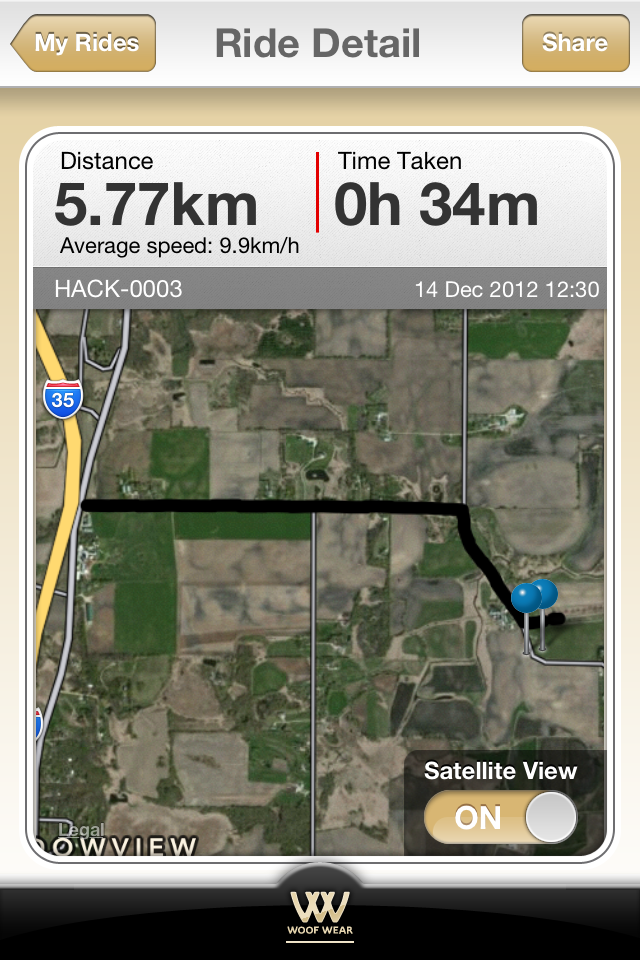
As a Minnesotan, I have already had my lion's share of winter riding experience. Lately I've really been enjoying my "Track My Hack" app by Woof Wear. Today Fox and I were out on the roads:


For those of you new to winter riding, make sure if your horse has shoes, you're picking feet out (sometimes I ended up needing a rubber mallet to get packed snow out of shoes - tapping gently on the side of the hoof or even using it VERY carefully with a hoof pick to chisel away ice) and consider one of the many ways of keeping snow from being packed in hooves: PAM, snow pads under shoes, etc.
Another consideration is to pick good ground- while I do trot and canter a large amount of my "trail rides" I make sure to do so only on level surfaces or slight hills that have a snowy shoulder and aren't packed down or icy. I would make sure to walk your chosen area first and "feel" the snow under your horse's hooves - any crunching or typical ice sounds and I would say no go! Ice can be hidden under even the most benign snow drift and can prove very dangerous for your horse.
I dress warmly in layers - I learned fast from my 3 hour lessons at HHTC (and we had lessons outside down to 0*) . I have both the Kerrits Long John capris and "Cuddle Dud" brand long johns and they both work well under breeches (the cuddle duds come in an amazing 4-way stretch - don't get anything else, they are the BEST!) and wear a thermal or long john top. I love love love my Kerrits breeches - I have both the Sit Tight and Warm and the Powerstretch models, and the Windpro fabric especially is amazing, and the full seat helps you be a little tighter in the tack where fleece breeches tend to be slippery. Wool socks, Mountain Horse Ice riders, a vest and a coat with a warm layer AND a wind layer usually top me off. I also like using face shields when outside to keep my lungs from burning and my face from being too cold and usually add one of the dorky helmet covers with the fleece wrap around to increase ear coverage (the behind the neck ear muffs sit too low for my Tipperary, but a band works fine) and hold the face shield up better. Gloves are also a HUGE deal - and I like the SSG silk liners not only on their own, but they are great to put between your hand and a hand warmer pack and then put gloves over the top - that way the handwarmer pack doesn't burn you when you're too numb to feel!
In the winter and late fall Foxie wears a quarter sheet either at the beginning of our rides, or all the way through. I have two:

The fleece Dover Saddlery, modeled by me here:

And our new addition, a Horze brand quarter sheet with a nylon windproof/waterproof top layer and fleece underneath.

It has a tail string that you can shorten, lengthen or do away with all together, and is cut away so there is no folding and stuffing involved to get a clear girth area (check the video for what I do with the Dover). The nylon was a little scary for Foxie at first, as it makes noise in the wind where fleece is silent, but it's a cozy riding sheet and has the little details - like plastic dees for the tail strap over metal, that can get cold and "zing" your horse's haunch that I really like. I also like 50% off Coupons, making this a 25$ quarter sheet.
Fox also wears boots of some form, though they are harder to maintain in the winter because they need more frequent washing if you ride on warm days, resulting in wet, sandy wraps that tend to freeze instead of dry.
As a plea from your horse, please make sure to warm up your bit - like that scene in "A Christmas Story" where the kid gets his tongue stuck to a metal pole... that's what can happen to your horse's tongue, lips or gums. Beyond that, you can actually cause nerve damage to your baby's sensitive mouth and cause him or her to be headshy for later bridling, a habit that can last a lifetime.
Finally, I stretch Fox before I ride. Some people do the leg lifting stretches shown here:
And yes, I support the lunging before a ride - not just on a line, but with loose side reins to encourage back stretching! Fox isn't as big of a fan of this:
And now, last but not least, me stretching Foxie. Pardon my voice, my crabby horse and the crappy video.
As Always, Comment with questions!
Ashley + Foxie
Subscribe to:
Posts (Atom)